
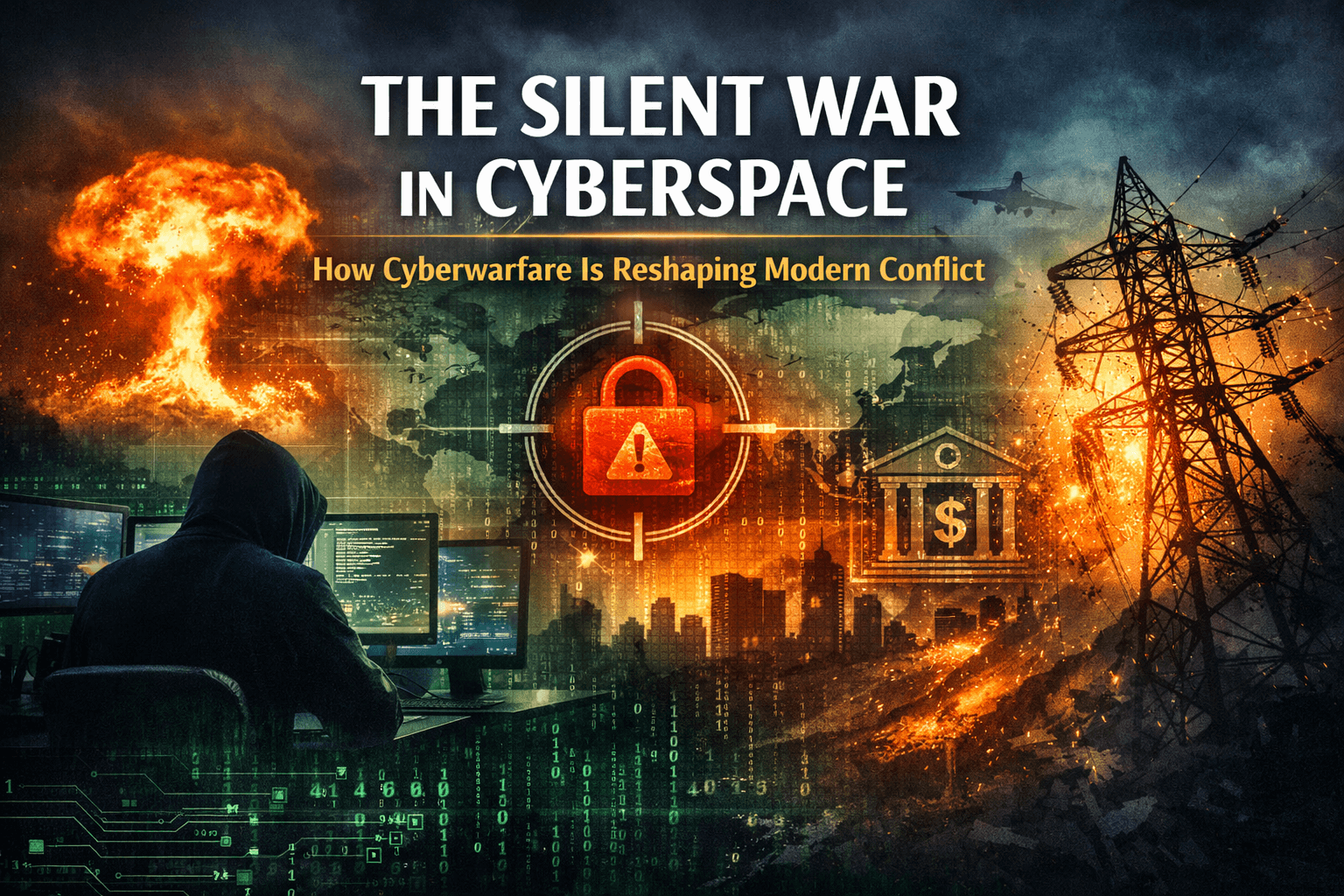
Cyberwarfare Is No Longer a Distant Threat. It Is a Present Reality. For many organisations, cyber threats still feel like isolated criminal incidents carried out for money. However, the reality is far more complex. Cyberwarfare has moved beyond opportunistic hacking and has become a strategic weapon used by nations to pursue geopolitical objectives. Therefore, understanding what cyberwarfare truly means is no longer optional. It is essential.
What Cyberwarfare Really Means
At its core, cyberwarfare refers to digital attacks carried out by nation states or state backed groups against another country’s systems, networks, or critical infrastructure. Unlike regular cybercrime, which is usually driven by profit, cyberwarfare is politically motivated. The goal is not simply to steal money. It is to disrupt, destabilise, spy, or even cause physical destruction.
One of the earliest widely discussed examples was the Stuxnet worm, which targeted Iran’s nuclear centrifuges and reportedly caused physical damage. This incident demonstrated that code alone could create real world destruction. Since then, cyber operations have increasingly complemented traditional military strategies. For instance, during the Russia Ukraine conflict in 2022, cyber intrusions were used alongside physical strikes to disrupt power systems and government operations.
However, debates continue around the exact definition of cyberwarfare. Some experts argue that only attacks causing physical harm should qualify. Others believe that large scale digital disruptions such as sustained denial of service campaigns also fall within this category. Regardless of definition, one thing is clear. Cyberwarfare is strategic, deliberate, and deeply tied to global power dynamics.
How Critical Sectors Become Targets
If cyberwarfare sounds abstract, its impact is anything but. Governments, banks, hospitals, and power grids are frequent targets because they form the backbone of a nation’s stability. Disrupt them, and you weaken public trust.
Governments are often attacked for espionage or to paralyse essential services. Distributed denial of service campaigns can overwhelm public portals, while covert intrusions aim to steal classified intelligence. Banks, on the other hand, are attractive because financial instability quickly spreads panic. Credential theft, ransomware, and long term email surveillance campaigns are used to access sensitive financial data and erode trust in the system.
Hospitals present a different but equally alarming risk. Ransomware attacks can lock patient records, delay surgeries, and even disrupt life saving equipment. Therefore, an attack on a hospital is not merely a data breach. It becomes a matter of human safety.
Power grids represent perhaps the most visible example of cyber operations crossing into physical impact. In Ukraine, cyber attacks have previously led to large scale blackouts affecting thousands of residents. These incidents demonstrate how operational technology systems, once considered isolated, can be compromised through digital entry points.
Although the targets differ, the attack path often follows a familiar pattern:
- A phishing email tricks an employee into clicking a malicious link
- Malware gains initial access to the internal network
- Unpatched vulnerabilities allow deeper system penetration
- Critical operational systems are eventually disrupted
This sequence highlights a crucial truth. Large geopolitical cyber events often begin with simple human error.
Why Geopolitical Tensions Trigger Digital Escalation
Cyber activity rarely occurs in isolation. It often intensifies during periods of geopolitical tension because digital operations offer a low cost and deniable way to retaliate.
In regions such as the Middle East, tensions involving Iran and GCC nations have historically triggered cyber incidents alongside political or military developments. Longstanding disputes over influence, energy control, and nuclear ambitions create an environment where digital retaliation becomes attractive. States can send a message without deploying conventional forces. However, the line between signalling and escalation is thin.
Historical incidents, such as the Shamoon virus that wiped thousands of systems at Saudi Aramco, illustrate how cyber tools are used in response to political friction. More recent conflicts have also seen blackouts, infrastructure threats, and state linked hacker groups issuing warnings against regional targets.
Therefore, cyberwarfare acts as both a pressure valve and a risk multiplier. It allows escalation without direct confrontation, yet it can easily spill beyond intended boundaries, affecting global businesses that have no direct involvement in the conflict.
The Mechanics Behind the Attacks
While geopolitical motives drive cyberwarfare, the technical execution often relies on familiar tactics. Phishing remains one of the most effective entry points. Carefully crafted emails impersonate trusted institutions, prompting employees to reveal credentials or download malicious files.
Once inside, malware exploits vulnerabilities in software or authentication systems. Attackers scan networks for weaknesses and use automated tools to escalate privileges, move laterally, and establish persistence. Over time, they exfiltrate sensitive data or position themselves to disrupt operations at a critical moment.
This layered approach makes cyber attacks particularly dangerous. Phishing provides access. Malware deepens control. Vulnerabilities allow expansion. Together, they create systemic compromise rather than isolated breaches.
Practical Steps to Strengthen Organisational Defence
Although cyberwarfare may seem overwhelming, resilience begins with disciplined cyber hygiene. Strong foundations significantly reduce exposure, even during periods of heightened geopolitical tension.
Start with people. Employees must understand how to identify suspicious emails, use strong passwords, and report unusual activity. Awareness training is not a one time exercise. It requires reinforcement.
Layer technical controls on top of human vigilance:
- Enable multi factor authentication for all accounts to prevent password only breaches
- Automate system updates to eliminate known vulnerabilities
- Use firewalls and encryption to protect sensitive communications
- Restrict access privileges based on defined roles
Beyond prevention, preparation is critical. Develop an incident response plan that clearly outlines detection, containment, recovery, and communication steps. Maintain regular offline backups to ensure business continuity during ransomware incidents. Additionally, conduct vulnerability assessments and tabletop exercises to test readiness under simulated attack conditions.
Equally important is visibility. Maintain a detailed inventory of hardware, software, and network connections. Monitor traffic patterns for anomalies. When you know what exists in your environment, you are better equipped to protect it.
Building Resilience in an Uncertain Digital Era
Cyberwarfare is no longer confined to military discussions or intelligence briefings. It affects supply chains, financial markets, healthcare systems, and energy networks. Therefore, organisations must recognise that global tensions can quickly translate into digital risk.
However, preparedness transforms uncertainty into controlled risk. By strengthening internal systems, training teams, and maintaining proactive monitoring, organisations move from reactive crisis management to strategic resilience.
In an interconnected world, cyber hygiene is not merely an IT function. It is a leadership priority. And in times of geopolitical strain, it may well become your strongest line of defence.
While definitions help frame the concept, cyberwarfare becomes far more compelling when you see how it unfolds in practice. The strategic intent, the layered execution, and the geopolitical undertones are easier to grasp when explained visually. If you would like a clearer perspective on how nation states deploy digital operations as instruments of power, this video offers an engaging and accessible breakdown of the subject:
It reinforces the ideas discussed here and provides additional context around how digital conflict is reshaping global security conversations.