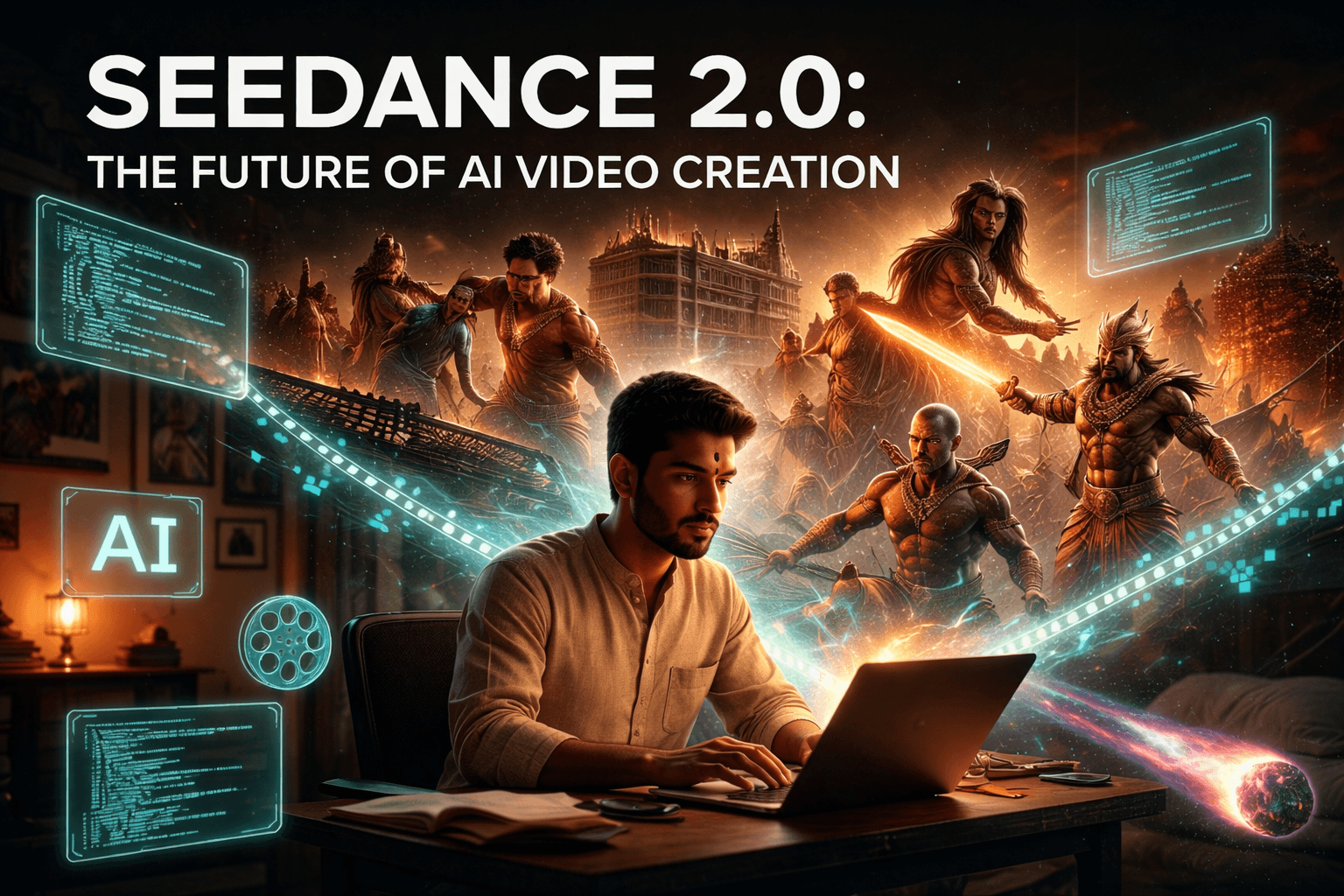
While we were all slowly settling into the new year; AI video generation just crossed a serious milestone. ByteDance, the company behind TikTok, launched Seedance 2.0 in February 2026, and the conversation around AI, creativity, and ownership changed almost overnight.
This is not another text to video tool that creates awkward animations or glitchy faces. Seedance 2.0 operates more like a digital film director. It can take text prompts, images, short video clips, and audio references and turn them into cinematic video outputs with synchronized sound, lighting, camera movement, and character performance in a matter of seconds. In simple terms, it brings high production filmmaking into the hands of individual creators.
Seedance 2.0 – Its Uniqueness
Most AI video tools generate short visuals from text and stop there. Seedance 2.0 goes much further by combining multiple inputs in one unified system.
It can process:
- Text prompts describing the scene
- Up to 9 images for visual reference
- Short video clips for movement and performance
- Audio files for music, voice, or background sound
The output is a 10 to 15 second cinematic video with realistic physics, lip sync, lighting, shadows, and multi shot editing. Instead of producing disconnected frames, the system maintains visual consistency across scenes, which is one of the biggest challenges in AI video generation.
The result feels less like generated content and more like something directed and produced by a professional studio. This is why many creators say Seedance 2.0 does not just generate video; it thinks like a filmmaker.
Reason behind Hollywood’s Quick Reaction
The internet quickly filled with AI generated clips showing famous actors in scenes they never performed. Viral videos of Tom Cruise fighting Brad Pitt on rooftops, fictional movie crossovers, and alternate film endings spread across social media within hours. That is where the real concern started.
Film studios and industry unions immediately raised objections because these videos used recognizable faces, characters, and intellectual property without permission. The issue was not just deepfakes or memes. The issue was that anyone could now create high quality film scenes using well known actors and franchises without hiring them or paying for rights. Resources say, for Hollywood, this challenges the entire economic structure of filmmaking.
Actors, studios, and production houses rely on exclusive control over faces, voices, and stories. When AI can recreate these elements instantly, the value chain shifts dramatically. What once required massive budgets, crews, and contracts can now be attempted with a laptop and creative prompting. That is why the reaction was strong and immediate.
The Real Impact on Actors and Influencers
This technology has varied affects on all creators in multipe ways. For actors, the concern is direct and immediate. Their likeness and performance are their primary assets. If AI tools can replicate their appearance or voice, opportunities in advertising, short films, and even background roles could shrink significantly. The fear is not only about losing jobs but also losing control over how their identity is used.
Influencers, however, face a more complex situation. On one side, Seedance 2.0 gives them incredible power. They can create professional looking content, experiment with storytelling, and produce high quality videos without expensive equipment or large teams. Content creation becomes faster, cheaper, and more scalable.
On the other side, their identity can also be copied or replicated. Someone could generate content using a similar face, voice, or style, making it harder to maintain uniqueness and control over personal branding. The balance between opportunity and risk is what makes this shift so important.
How Creators Can Stay Relevant in This New Era
Technology is changing fast, but survival in the creative industry has always depended on adaptation. Seedance 2.0 does not eliminate creators. It changes how they work and what they must prioritize. Some practical strategies are already emerging across the industry.
Protect your identity and content
Creators need to take ownership seriously. Watermarking content, registering intellectual property, and clearly defining AI usage rights in contracts are becoming essential. Many professionals are now exploring digital licensing models where their likeness is used under controlled agreements.
Use AI as a tool, not a replacement
The strongest outputs still come from human creativity. AI can generate visuals, but it cannot replace vision, storytelling, or cultural understanding. Creators who learn how to guide AI effectively will have a major advantage.
Focus on human connection
Community, live interaction, personal storytelling, and authenticity remain difficult for AI to replicate. Audiences continue to connect with real experiences, emotions, and personalities rather than perfect visuals alone.
Build original intellectual property
Owning original characters, stories, and creative assets ensures long term control. Instead of relying on existing celebrity references or popular franchises, creators who develop their own IP create a sustainable advantage.
Adopt a hybrid approach
Many filmmakers and creators are already combining AI with traditional production. AI helps with pre visualization, experimentation, and low budget projects, while human teams focus on storytelling and final production quality.
This hybrid model is likely to become the industry standard.
The Bigger Picture Behind Seedance 2.0
Seedance 2.0 represents more than just a technological upgrade. It signals a shift in how creative work will be produced, distributed, and monetized in the future. Just like cameras and editing software once democratized filmmaking, AI video tools are now democratizing cinematic production. The difference is that this wave also challenges identity, ownership, and control in ways the industry has never faced before.
The creators who succeed will not necessarily be the biggest studios or the fastest prompt engineers. They will be the ones who understand their value, protect their identity, and use technology to amplify their unique voice. AI will continue to evolve. Tools will become more powerful and more accessible. But the core of creative work will still depend on storytelling, perspective, and human insight. In the end, technology changes the tools, but identity and ownership determine who gets to tell the story.
Watch my quick breakdown of Seedance 2.0 in action and see how AI filmmaking is changing faster than anyone expected.